
 Brian's Empire KE
 Brian Kimathi
Is that traffic ticket text a scam or real?
Got a DMV payment text? Here’s how to spot the scam before you click
 Video
VideoFox News Flash top headlines for May 13
Fox News Flash top headlines are here. Check out what's clicking on FoxNews.com.
You're going about your day when your phone buzzes. A text hits your phone. It looks official. It sounds urgent. And suddenly, you are being told you owe money for a traffic violation. That is exactly what Todd from Texas experienced. He emailed us and said:
"I received this text message today. It was so baffling because I haven't lived in California for nearly a decade. I didn't click on anything or respond. How can I tell if this is for real or if this is a scam?"
If you've gotten a message like this, you are not alone. This type of scam is spreading fast, and it is designed to pressure you into acting before you think. Let's break down what is really going on.
Sign up for my FREE CyberGuy Report
- Get my best tech tips, urgent security alerts and exclusive deals delivered straight to your inbox.
- For simple, real-world ways to spot scams early and stay protected, visit CyberGuy.com – trusted by millions who watch CyberGuy on TV daily.
- Plus, you'll get instant access to my Ultimate Scam Survival Guide free when you join.
FAKE AGENT PHONE SCAMS ARE SPREADING FAST ACROSS THE US
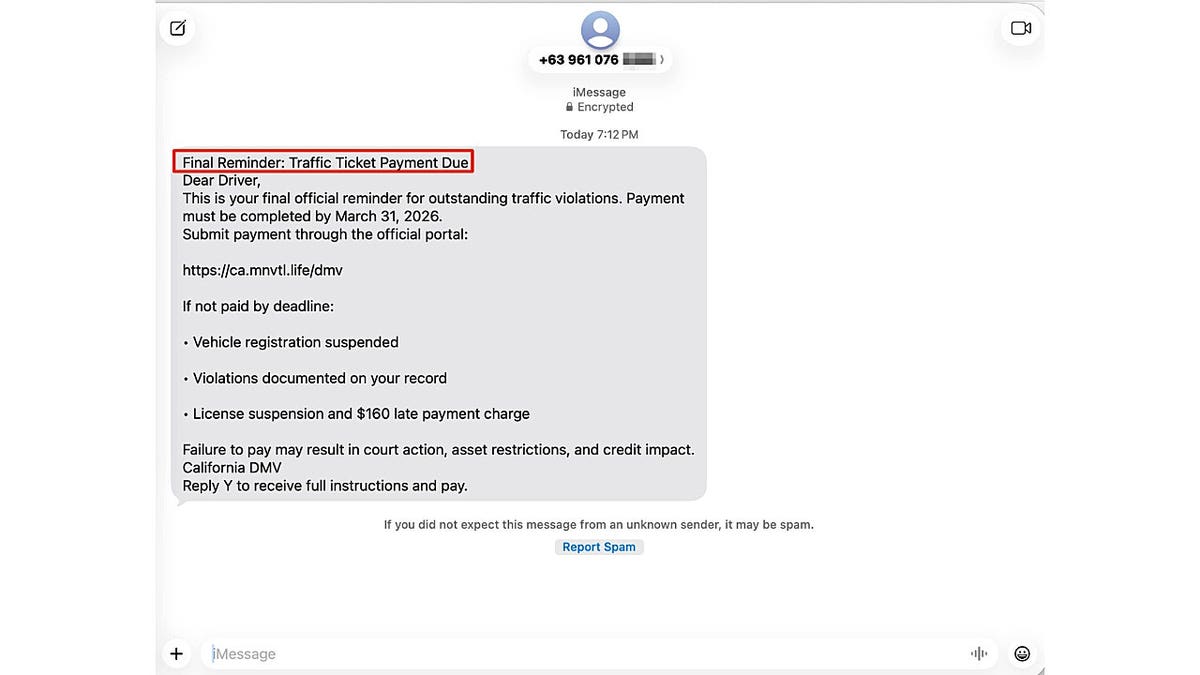
This message may look official, but several red flags show it is likely a scam designed to pressure you into paying quickly. (Kurt "CyberGuy" Knutsson)
What the traffic ticket scam text looks like
At first, the message seems convincing. It claims to be a "final reminder" from the California DMV, and it warns of penalties like license suspension and added fees. It even includes a link that appears somewhat official. However, once you slow down and take a closer look, the red flags quickly start to pile up.
The biggest red flags in this message
Here are the key warning signs to watch for in messages like this.
9 WAYS SCAMMERS CAN USE YOUR PHONE NUMBER TO TRY TO TRICK YOU
1) The phone number makes no sense
The message comes from a number with a +63 country code. That is the Philippines, not California. Government agencies in the U.S. do not send official legal notices from international numbers. That alone is a major warning sign.
2) No name, just "Dear Driver"
Legitimate notices from a DMV or court almost always include your full name or at least some identifying information. "Dear Driver" is vague on purpose. It allows scammers to send the same message to thousands of people.
3) The link isn’t a real DMV website
The message includes this link:
ca.mnvtl.life/dmv
That isn’t a government domain. Official DMV websites in California use ".ca.gov" or similar trusted domains. Scammers often create lookalike links to trick you into clicking.
4) Urgency and threats
The message pushes you to act quickly with a deadline. It lists consequences like license suspension and extra charges. Scammers rely on fear. When you feel rushed, you are more likely to click without thinking.
FBI WARNS OF DANGEROUS NEW ‘SMISHING' SCAM TARGETING YOUR PHONE
5) Asking you to reply to proceed
The text says to reply with "Y" to get instructions. That is another trap. Responding confirms your number is active, which can lead to more scam messages.
6) Generic language and odd phrasing
Parts of the message feel slightly off. The tone is formal but not quite right. That subtle awkwardness is common in scam messages sent to large groups of people.
7) Overloaded threats designed to scare you
The message piles on consequences like license suspension, added fees, court action and even credit damage. In this case, it even mentions a license suspension and a $160 late payment charge. That combination is meant to overwhelm you and push you to act fast. Real agencies usually provide clear, specific notices, not a long list of escalating threats in a single text.
INSIDE A SCAMMER’S DAY AND HOW THEY TARGET YOU

Scam texts like this often arrive out of nowhere and try to create urgency before you have time to question them. (Kurt "CyberGuy" Knutsson)
What this means for you
Even if you have never driven in California, you could still receive this message. Scammers cast a wide net and hope someone takes the bait. If you click the link, you could be taken to a fake payment page. That page may ask for your credit card details, personal information or login credentials. In some cases, it can also install malware on your device or redirect you to credential-stealing pages. This isn’t about a ticket. It is about getting your data. State DMVs typically do not send final legal notices or payment demands by text message.
Why these scams keep working
These messages work because they tap into something most people fear. Legal trouble, fines and losing driving privileges. They also look just real enough to pass a quick glance. That is all scammers need. As more services move online, these scams will continue to evolve.
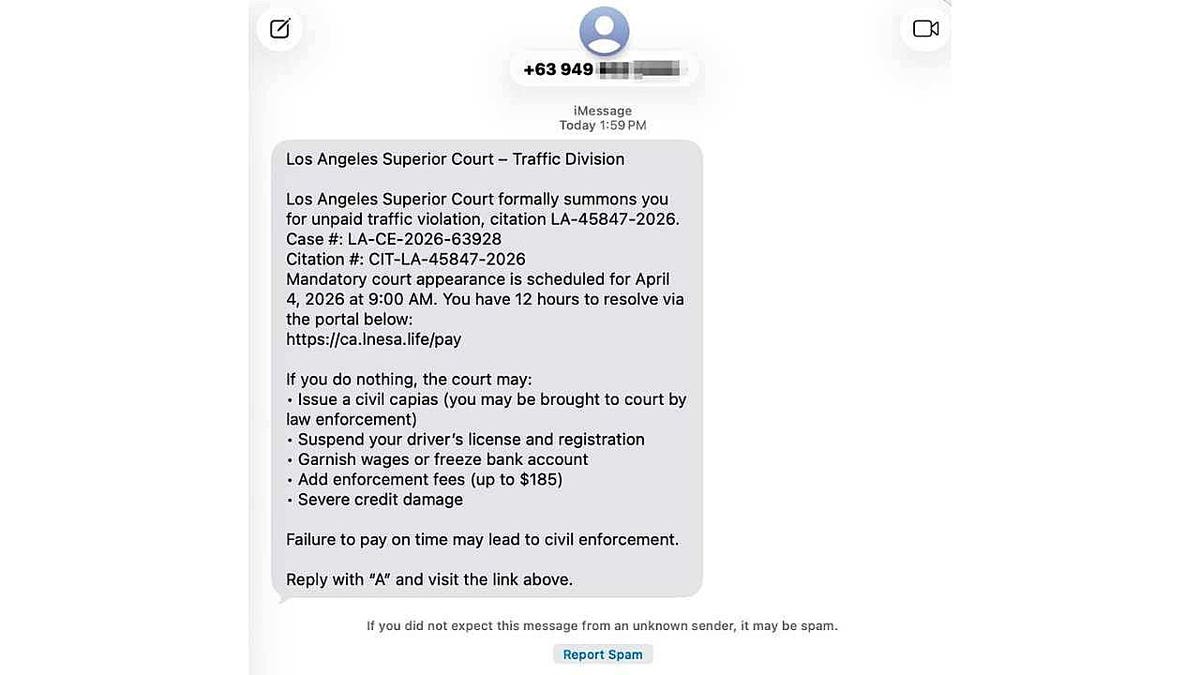
Unlike typical DMV scams, this message impersonates a court and escalates the threats to make the situation feel more serious (Kurt "CyberGuy" Knutsson)
Ways to stay safe from traffic ticket text scams
Start with a simple rule. Never trust a payment request that shows up out of nowhere. Here are practical steps you can take:
1) Do not click the link
If you are unsure, do not tap anything in the message. That includes links and reply options.
2) Use strong antivirus software
If you accidentally click a link, strong antivirus software can help detect malware and protect your data. Get my picks for the best 2026 antivirus protection winners for your Windows, Mac, Android & iOS devices at Cyberguy.com
3) Verify directly with the DMV
Go to your state's official DMV website by typing it yourself into your browser. Do not use the link in the text.
4) Check the sender carefully
Look at the phone number. International numbers or random strings are a clear warning sign.
5) Ignore generic greetings
Real notices will usually include your name or case details. Vague language is a red flag.
6) Consider a data removal service
Scammers often get your number from data broker sites. Removing your personal info from those databases with a data removal service can reduce these messages. Check out my top picks for data removal services and get a free scan to find out if your personal information is already out on the web by visiting Cyberguy.com
7) Block and report the number
On your phone, block the sender and report it as spam. This helps reduce future attempts.
8) Turn on spam filtering
Enable spam filtering on your phone or through your carrier to catch more of these messages before they reach you.
Kurt's key takeaways
Todd did the right thing. He paused, questioned the message and did not click. That one decision likely saved him from handing over personal information. When it comes to messages like this, skepticism is your best defense. If something feels off, trust that instinct.
Should phone carriers and tech companies be doing more to block scams like this before you ever see them? Let us know by writing to us at Cyberguy.com
CLICK HERE TO DOWNLOAD THE FOX NEWS APP
Sign up for my FREE CyberGuy Report
- Get my best tech tips, urgent security alerts and exclusive deals delivered straight to your inbox.
- For simple, real-world ways to spot scams early and stay protected, visit CyberGuy.com – trusted by millions who watch CyberGuy on TV daily.
- Plus, you'll get instant access to my Ultimate Scam Survival Guide free when you join.
Copyright 2026 CyberGuy.com. All rights reserved.
Kurt "CyberGuy" Knutsson is an award-winning tech journalist who has a deep love of technology, gear and gadgets that make life better with his contributions for Fox News & FOX Business beginning mornings on "FOX & Friends." Got a tech question? Get Kurt’s free CyberGuy Newsletter, share your voice, a story idea or comment at CyberGuy.com.
Support Everyday Chronicle
Global reporting requires independent voices. If you value our coverage, please consider a small contribution to help us grow.
Click the button below to make a secure donation
Discover more from Everyday Chronicle
Subscribe to get the latest posts sent to your email.
Have any thoughts?
Share your reaction or leave a quick response — we’d love to hear what you think!
-
 0
0
-
 0
0
-
 0
0
-
 0
0
-
 0
0
-
 0
0
